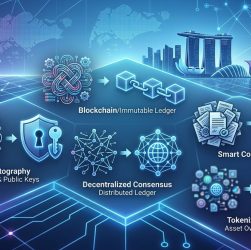
Facebook, Twitter, and Instagram control how billions of people connect online. They decide what you see, who profits from your content, and what happens to your data. But a new wave of blockchain-based social platforms is challenging that control, promising users ownership of their digital lives. The question isn’t whether these decentralized alternatives exist anymore. It’s whether they can actually compete.
Decentralized social media platforms offer users data ownership, censorship resistance, and creator monetization through blockchain technology. While they face significant adoption barriers like complexity and limited network effects, emerging protocols like Farcaster and Lens are demonstrating viable alternatives to Web2 giants. Success depends on solving user experience challenges, building critical mass, and proving sustainable economic models that reward both creators and participants.
Understanding what makes decentralized social media different
Traditional social platforms operate on a simple premise. You create content, they own the data, and they control the distribution. Your follower list belongs to the platform. Your content can disappear at any moment. The advertising revenue generated by your engagement goes to shareholders.
Decentralized social networks flip this model. Built on blockchain technology, these platforms distribute control across networks of users rather than centralizing it in corporate servers. Your identity, connections, and content exist on protocols you control, not platforms that can ban you.
Think of it like email versus a walled garden. You can switch email providers without losing your address book or message history. Decentralized social media aims to bring that same portability to your social graph.
The technical foundation relies on several key components:
- Smart contracts that govern platform rules without centralized enforcement
- Cryptographic keys that prove identity and ownership
- Distributed storage systems that prevent single points of failure
- Token economics that reward creators and curators directly
- Open protocols that let multiple applications access the same social graph
This architecture creates fundamentally different incentives. Platforms compete on user experience rather than lock-in. Creators own their audience relationships. Users control their data and can monetize their attention directly.
The compelling advantages drawing users away from Web2
Decentralized platforms solve real problems that frustrate users on traditional social media. Data ownership tops the list. Your posts, photos, and social connections become portable assets you control through cryptographic keys.
Censorship resistance matters to communities marginalized or silenced by platform policies. No single entity can delete your account or remove your content. Consensus mechanisms distributed across network participants make unilateral censorship technically difficult.
Creator monetization works differently too. Instead of platforms taking 30% to 50% cuts, smart contracts enable direct payments between creators and supporters. Some protocols distribute platform tokens to early adopters, turning users into stakeholders.
Content algorithms become transparent and customizable. Rather than opaque recommendation engines optimizing for engagement at any cost, users can choose or create their own filtering systems. You decide what you see, not what maximizes advertising revenue.
Privacy protections improve through encryption and selective disclosure. You control what information gets shared with which applications. Third-party developers can build features without accessing private user data.
The shift from platform-owned to user-owned social graphs represents the most significant architectural change in social media since the smartphone era. Users who control their connections and content gain negotiating power platforms never offered before.
Real platforms showing decentralized social media can work
Several blockchain-based social networks have moved beyond theory into active use. Farcaster operates as a protocol where users own their identity and social connections. Multiple client applications like Warpcast provide different interfaces to the same underlying network.
Lens Protocol takes a similar approach on Polygon, treating social profiles as NFTs that users fully control. Creators can monetize through various mechanisms while maintaining ownership of their audience relationships.
Mastodon and the broader Fediverse demonstrate federated social networking at scale, with millions of active users across thousands of independently operated servers. While not blockchain-based, it proves decentralized social architecture can support real communities.
Nostr offers a minimalist protocol for censorship-resistant social networking, gaining traction among privacy advocates and communities concerned about platform control.
DeSo blockchain specializes in social applications, providing infrastructure specifically designed for decentralized social features like tipping, NFTs, and social tokens.
These platforms share common patterns:
- Separate protocol layer from application layer
- Enable multiple clients accessing the same social graph
- Use cryptographic identity instead of platform accounts
- Implement on-chain or distributed storage for critical data
- Create token economics rewarding network participation
Early adopters include crypto-native communities, content creators frustrated with platform policies, and users prioritizing privacy and control. Growth remains modest compared to Web2 giants, but engagement metrics often exceed traditional platforms among active users.
The significant barriers preventing mass adoption
User experience complexity creates the biggest obstacle. Managing cryptographic keys, paying transaction fees, and understanding wallet software intimidates mainstream users. Most people want to post photos, not learn about blockchain nodes.
Network effects heavily favor incumbents. Your friends and family use Instagram and Facebook. Switching platforms means leaving behind your existing social connections. Decentralized alternatives need critical mass to become useful, but can’t reach critical mass without being useful first.
Performance limitations affect user experience. Blockchain transactions cost money and take time. Storing media on decentralized networks introduces latency. Users accustomed to instant, free interactions find these friction points frustrating.
Content moderation challenges multiply in decentralized systems. While censorship resistance protects legitimate speech, it also makes removing illegal content or coordinating against harassment more difficult. Communities need governance mechanisms that balance freedom with safety.
| Challenge | Impact on Adoption | Potential Solutions |
|---|---|---|
| Key management complexity | High barrier for non-technical users | Social recovery, biometric authentication, custodial options |
| Transaction costs | Makes micro-interactions expensive | Layer 2 scaling, subsidized transactions, batching |
| Limited network effects | Reduces platform utility | Cross-platform bridges, incentivized onboarding |
| Content discovery | Hard to find relevant content | Decentralized recommendation algorithms, curation markets |
| Moderation difficulty | Safety concerns for mainstream users | Community-driven governance, reputation systems |
Regulatory uncertainty adds another layer of complexity. Governments struggle to classify and regulate decentralized protocols. Token economics may trigger securities laws. Data sovereignty requirements conflict with distributed storage.
Sustainable business models remain unproven at scale. Token incentives can bootstrap networks but may not support long-term operations. Infrastructure costs money. Developers need compensation. Finding revenue sources that don’t compromise decentralization principles challenges every project.
How blockchain architecture enables new social possibilities
The technical foundation of decentralized social media creates capabilities impossible on traditional platforms. Programmable money integrates directly into social interactions. Tipping creators, crowdfunding projects, or purchasing digital goods happens with the same ease as liking a post.
Composability lets developers build on existing protocols without permission. A new photo-sharing app can access your social graph from Lens Protocol. A video platform can integrate your Farcaster identity. Users benefit from innovation without fragmenting their social presence.
Verifiable credentials enable reputation systems that transfer across platforms. Your contributions and credibility become portable. Spam and bot detection improves when identity carries cryptographic proof and on-chain history.
Decentralized storage networks prevent content from disappearing when companies shut down or change policies. Your photos and posts persist as long as someone values storing them.
Smart contracts automate complex interactions. Revenue sharing between collaborators, content licensing, and access control all execute without intermediaries. Creators set terms, and code enforces them.
Interoperability between protocols creates network effects that benefit users rather than platforms. Following someone on one application makes their content accessible across all compatible clients. Your social graph becomes infrastructure other developers build upon.
Steps platforms must take to compete effectively
Decentralized social networks need to solve specific problems to challenge Web2 dominance. User experience must improve dramatically. Onboarding should feel as simple as creating an Instagram account, with complexity hidden behind intuitive interfaces.
- Abstract away blockchain complexity through progressive disclosure
- Provide free transactions for basic social interactions
- Implement familiar features users expect from existing platforms
- Build mobile-first applications matching Web2 performance
- Create seamless bridges connecting decentralized and traditional platforms
Content discovery algorithms need development that matches or exceeds centralized platforms. Recommendation systems can leverage on-chain data and user preferences while respecting privacy. Curation markets might reward users who surface quality content.
Governance frameworks must balance freedom with responsibility. Communities need tools for self-moderation that don’t require centralized control. Reputation systems, user-driven reporting, and transparent appeals processes can address harmful content while preserving censorship resistance.
Sustainable economics require moving beyond speculative token models. Successful platforms will likely combine multiple revenue streams including premium features, creator subscriptions, and protocol fees. The key is aligning incentives so platforms succeed when users and creators succeed.
Strategic partnerships with existing creators and communities can bootstrap network effects. Rather than competing directly with Instagram for general users, focusing on underserved communities or specific use cases builds initial traction.
What digital marketers need to know right now
Brands and marketers should monitor decentralized social developments even if mass adoption remains years away. Early presence on emerging platforms builds credibility with crypto-native audiences and positions companies as innovators.
The creator economy shifts fundamentally in decentralized environments. Direct relationships between brands and creators become easier when smart contracts handle payments and rights management. Influencer fraud decreases when engagement metrics live on transparent blockchains.
Community ownership models change how brands build loyalty. Token-gated access, NFT memberships, and decentralized autonomous organizations let customers become stakeholders. This creates deeper engagement than traditional social media allows.
Data strategies need rethinking. Third-party cookies and platform data monopolies face increasing restrictions. Blockchain-based identity and zero-knowledge proofs might offer privacy-preserving alternatives for targeting and measurement.
Content strategies should consider portability and ownership. Creating content tied to proprietary platforms risks losing access and audience. Decentralized protocols let brands maintain relationships with followers even if specific applications shut down.
Southeast Asian markets present particular opportunities. Singapore’s regulatory framework supports blockchain innovation while maintaining consumer protection. Regional audiences show strong adoption of mobile-first applications and digital payments, reducing friction for blockchain-based social features.
Realistic timeline for mainstream competition
Expecting decentralized platforms to overtake Facebook or Instagram in the next few years sets unrealistic expectations. But meaningful competition in specific niches is already happening.
Crypto communities have largely migrated to decentralized platforms for discussion and coordination. Content creators frustrated with platform policies increasingly experiment with blockchain-based alternatives. Privacy-conscious users adopt federated and decentralized options.
The next three to five years will likely see continued improvement in user experience and infrastructure. Layer 2 scaling solutions reduce transaction costs. Better key management makes security accessible. Mobile applications reach feature parity with Web2 platforms.
Mainstream adoption probably requires a catalyst. Regulatory action against Web2 platforms, major data breaches, or aggressive monetization changes might push users toward alternatives. Alternatively, a killer application built on decentralized infrastructure could demonstrate compelling advantages.
The more likely scenario involves gradual integration rather than wholesale replacement. Hybrid models combining centralized and decentralized elements may emerge. Traditional platforms might adopt blockchain features for creator monetization or data portability under competitive pressure.
Success looks different than simply replicating Facebook with blockchain. Decentralized social media will probably excel in specific use cases where ownership, censorship resistance, or programmability matter most. Professional networks for creators, community governance platforms, and specialized interest groups may adopt decentralized infrastructure before general social networking.
Why this matters for Southeast Asian innovation
Singapore positions itself as a blockchain hub, creating opportunities for developers and enterprises building decentralized social infrastructure. The regulatory clarity provided by payment services legislation reduces uncertainty compared to other markets.
Regional characteristics favor decentralized adoption. High smartphone penetration, comfort with digital payments, and young demographics create favorable conditions. Language diversity and cross-border communities benefit from protocols that transcend national boundaries.
Enterprise applications may emerge before consumer adoption reaches critical mass. Business use cases for decentralized social features include supply chain coordination, professional networks, and customer communities. Organizations can experiment with controlled implementations before public networks mature.
The competitive landscape remains open. No dominant platform has captured the decentralized social space the way Facebook dominated Web2. Developers and entrepreneurs building now can influence protocol development and establish early market positions.
Understanding these technologies benefits professionals even if specific platforms fail. The architectural patterns, economic models, and user experience lessons apply broadly across Web3 development. Skills in building decentralized applications grow increasingly valuable as blockchain adoption expands.
Making sense of the competitive landscape
Decentralized social media can compete with Web2 giants, but not by simply copying their playbook. The question isn’t whether blockchain-based platforms will replace Instagram next year. It’s whether they can carve out meaningful niches where ownership, censorship resistance, and programmability create genuine advantages.
The technology works. Real platforms serve real users today. But crossing the chasm from early adopters to mainstream audiences requires solving hard problems around user experience, network effects, and sustainable economics. Success demands both technical innovation and practical understanding of what actually motivates people to switch platforms.
For professionals watching this space, the opportunity lies in understanding the fundamental shifts happening in how digital social infrastructure works. Whether you’re building applications, advising clients, or planning marketing strategies, these architectural changes will shape the next generation of online interaction. The platforms that win may look different than what we expect, but the principles of user ownership and protocol-based social graphs are here to stay.
Start experimenting now. Create accounts on decentralized platforms. Understand how cryptographic identity works. Follow protocol developments. The companies and professionals who understand these systems early will shape how billions of people connect online in the years ahead.